Gorilla Netting

Backstop Netting Installers

Professional backstop netting installation that protects spectators while maintaining excellent visibility and aesthetics.

Backstop Netting Installers for Every Level of Play

Backstop netting is essential for protecting spectators at baseball fields, softball diamonds, and other sports venues. As experienced backstop netting installers, we combine superior ball containment with minimal visual obstruction—engineering cable-suspended and tie-back systems that meet wind-load requirements for your jurisdiction.

From Little League fields to college and municipal stadiums, Gorilla Netting designs and installs backstop systems sized for real foul-ball trajectories behind home plate and along baselines. Our crews handle pole setting, cable grid layout, hardware tensioning, and panel hanging with Target Zero safety protocols on every job site.

Plan before you quote

Use the Gorilla Planner to explore layout and cost drivers for backstop netting before requesting a formal estimate.

Free guide

Heights, system types, materials, and engineering considerations before you buy.

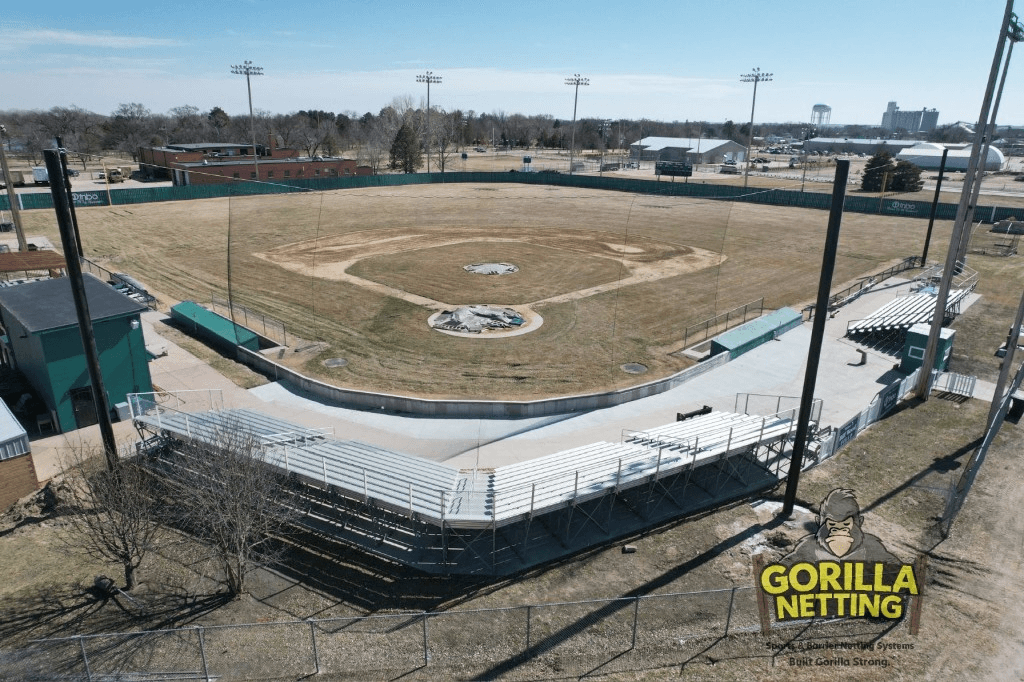
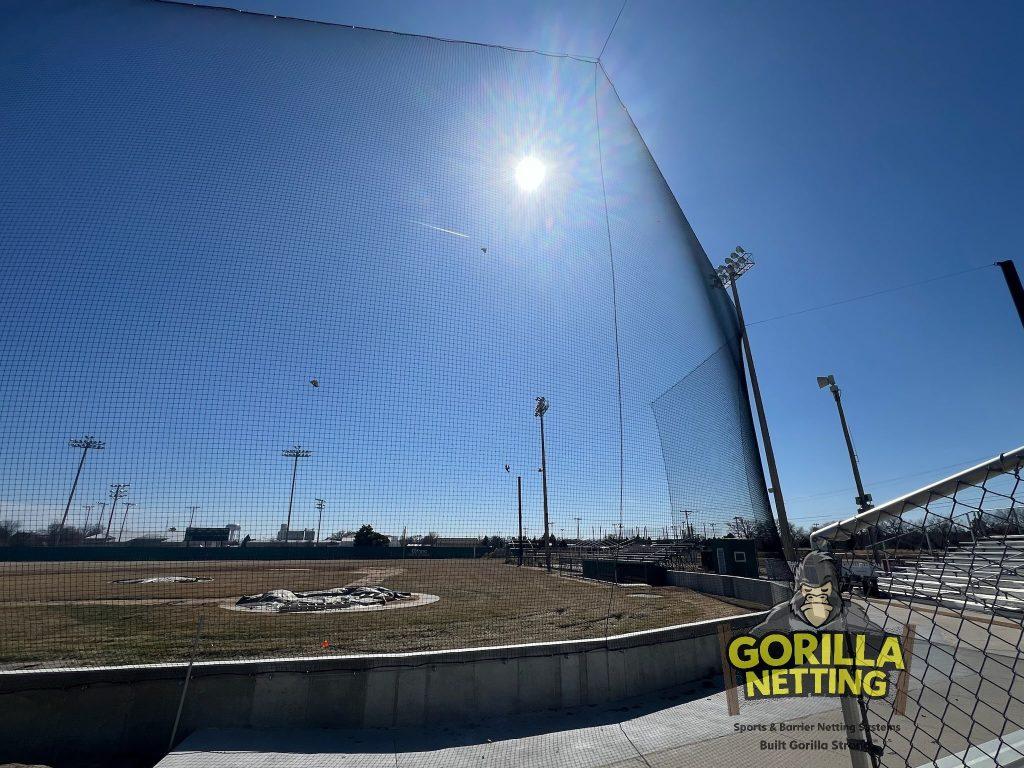
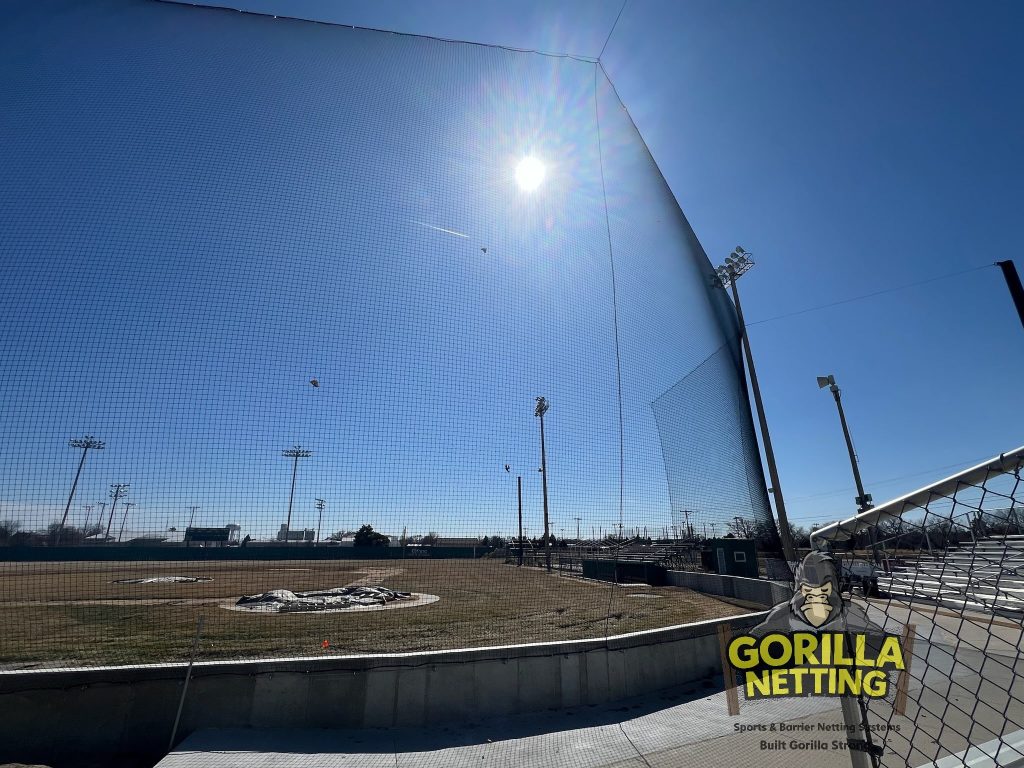
Elevated view of a baseball field showing cable-suspended backstop netting protecting spectator bleachers behind home plate

Multi-sport facilities have additional considerations that a single-sport installer may not account for. We regularly design backstop structures that serve as shared anchor points for lacrosse netting, soccer sideline barriers, and football end-zone containment — reducing overall structure count and installation cost across the facility. A properly engineered shared structure handles the load combinations. An undersized backstop frame does not.

There's also a meaningful difference between a new backstop installation and a replacement project on an existing frame. Both are standard for us. On re-net projects, we include a structural inspection of the existing frame before any material is ordered — cable condition, post corrosion, anchor integrity, and hardware serviceability. If the frame passes, we hang new netting. If it doesn't, we tell you before you spend money on mesh that will outlast the structure holding it.

Typical project timeline from quote to installation complete runs 4 to 6 weeks. That window includes engineering review, material lead times, and crew scheduling. Smaller projects at existing facilities with straightforward specs sometimes come in faster. Large municipal or collegiate installs with complex permitting requirements can run longer. We give you an honest schedule at the quote stage — not an optimistic number that slips.

Backstop Netting Installation Process

Every backstop netting installation begins with a site survey and layout review. We measure foul territory, bleacher locations, and existing structures, then recommend system type—traditional freestanding poles, cable-suspended panels, or tie-back anchors into stadium steel or concrete. Licensed engineers stamp packages where local codes require wind-load documentation.

Material specification typically includes #36 twisted knotted or knotless nylon or polyester mesh, powerline-grade cable, thimbles, turnbuckles, and UV-treated panels hung to maintain sight lines for fans and broadcast angles. Our installation crews mobilize with boom lifts and tensioning tools to complete hangs efficiently while your field remains usable when phasing allows.

Final walkthrough includes tension checks, hardware inspection, and warranty registration. Completed backstop installs carry Gorilla Netting's 5-year full coverage warranty on materials and labor—giving athletic directors and parks departments confidence in long-term performance.

Backstop Netting Specs & System Types

Backstop netting installers must match mesh energy absorption, panel height, and cable span to your field class. Common configurations include:

  • Cable-suspended backstops with minimal pole footprint behind the plate
  • Tie-back systems anchored to stadium structure for urban fields
  • Extended wing panels along first and third base foul lines
  • Multi-sport adaptations for lacrosse, soccer, or shared complexes
  • Replacement netting on existing frames after structural inspection

Typical specification ranges

Panel height
30–45 ft behind plate; extensions along baselines per layout
Mesh
#36 1-7/8″ knotted or knotless nylon/polyester
Hardware
Utility-grade cable, galvanized fittings, UV-treated panels
Engineering
Wind-load stamped packages where AHJ requires

Backstop Netting Solutions

We offer multiple backstop configurations to meet your facility's specific needs.

Spectator Protection

Keep fans safe from foul balls and errant throws with professional-grade backstop netting systems.

Excellent Visibility

Our netting is designed for minimal visual obstruction—spectators enjoy unobstructed views of the action.

Multi-Sport Applications

Backstop systems for baseball, softball, lacrosse, soccer, and any sport requiring spectator protection.

Backstop Netting Materials — What Your Installers Should Be Using

Material selection determines how long your backstop performs. The wrong choice costs you a replacement project in five years. The right choice holds up for decades with minimal maintenance.

#36 twisted knotted nylonis the standard for baseball backstops. It's durable, repairable in the field, and holds tension well across large panel spans. Most recreational and high school fields spec #36 for exactly this reason.

Knotless polyester is the right call when sightlines matter — broadcast facilities, venues with camera positions behind the plate, and premium collegiate or professional installations. Knotless weave produces a cleaner visual profile from a distance and reduces glare interference with broadcast-quality optics.

All outdoor netting must carry UV treatment rated for your climate zone. Untreated netting degrades in 2–3 seasons in high-UV environments. We specify UV-inhibitor concentration based on site latitude and average annual sun exposure — not a one-size catalog spec.

Cable sizing matters. We use utility-grade galvanized cable sized for the actual wind-load calculation on your site — not undersized hardware that creeps and sags over time. All terminations use forged steel thimbles, turnbuckles, and shackles rated for the design load with a safety factor applied. Nothing that a structural inspector can't review on site.

For facilities that want near-invisible netting — indoor training centers, high-end private facilities, or any installation where aesthetics are the priority — Dyneema is our premium option. Dyneema offers exceptional strength at an extremely fine diameter, producing a backstop that practically disappears from the stands.

Backstop Netting Height and Specification Guide

Height is not a guess. It's an engineering output based on foul-ball trajectory, foul territory depth, seating geometry, and local wind-load requirements.

Standard backstop heights run 30 to 45 feet behind home plate. Shorter configurations (30–35ft) are typical for recreational leagues with limited foul territory and covered dugout structures. Taller configurations (40–45ft) are standard for high school varsity, collegiate, and municipal facilities where bleacher positions extend well into foul territory and ball speeds are higher.

Baseline wing extensions— the side panels running toward first and third base — are spec'd based on dugout proximity, spectator seating layout, and the foul-ball angle data for that level of play. We don't guess the wing length. We measure actual foul territory depth and bleacher positions before recommending dimensions.

Level-specific differences:

  • Little League: 20–30ft typical; local fencing ordinances often set the floor
  • High School: 30–40ft; state athletic association guidelines apply in many states
  • College/Municipal: 40–45ft or taller; AHJ wind-load documentation required and structural drawings stamped by a licensed PE

Every project that requires a building permit gets AHJ wind-load documentation from us as part of the standard scope. We provide stamped engineering drawings to support permit applications — the owner or general contractor handles permit submission.

Backstop netting system

Built Gorilla Strong.®

Our backstop systems are engineered for durability and long-lasting performance in all weather conditions.

  • Cable-suspended systems available
  • Tie-back and traditional designs
  • UV-resistant netting materials
  • Minimal maintenance required
  • Meets safety regulations
  • Custom heights and configurations
  • Professional installation crews
  • Industry-leading warranty

Upgrade Your Backstop Today

Contact us for a free consultation and quote for your backstop netting project.

Download: Netting Materials Guide

Compare nylon, polyester, and Dyneema (UHMWPE) with best-fit recommendations by application.

Backstop Netting FAQ

What does backstop netting installation include?

Backstop netting installers from Gorilla Netting deliver engineered layout, pole or tie-back anchorage, cable suspension, #36 or specified mesh netting, hardware rated for wind loads, and professional hang with spectator sight-line review behind home plate and foul territory.

How high should baseball or softball backstop netting be?

Heights depend on field layout, elevation, and foul-line geometry—common cable-suspended systems run 30–45 feet behind the plate with extensions along baselines. We measure your diamond and recommend heights that protect bleachers without blocking views.

Do you install backstop netting nationwide?

Yes. Gorilla Netting is a US-based specialty contractor headquartered in Florida with field operations in Kentucky. Our crews mobilize to turnkey install sites across the United States and internationally — location is not a barrier.

How can I get pricing for backstop netting installers?

Provide field type (baseball, softball, multi-sport), photos of the current backstop, and bleacher locations. Request a project quote at gorillanetting.com/get-quote or call 1-800-274-1079. Pricing is scope-based after we review site layout, heights, materials, and access—not a flat per-foot rate.

Need project-specific details? Request a free quote or call 1-800-274-1079.