Gorilla Netting
Built Gorilla Strong.®

Golf Netting Installation

Professional golf netting installers elevating safety and performance for golf facilities.

Golf Netting Installers for Ranges, Courses, and Enclosures

Golf netting systems are engineered barrier systems that contain and deflect balls at driving ranges, golf courses, golf entertainment venues, and practice enclosures. As golf netting installers, Gorilla Netting provides full turnkey support from design and planning through pole setting and professional panel installation—not supply-only contracts.

Whether you are building a new range or upgrading an existing facility, our golf netting installation crews tailor pole systems, netting materials, and layout strategies to your site conditions, liability exposure, and performance goals. We engineer for real ball flight—not catalog dimensions.

Plan before you quote

Use the Gorilla Planner to explore layout and cost drivers for golf netting before requesting a formal estimate.

Free guides

Get cost and spec clarity before you request a quote.

Prefer reading online? Visit Resources & Guides.

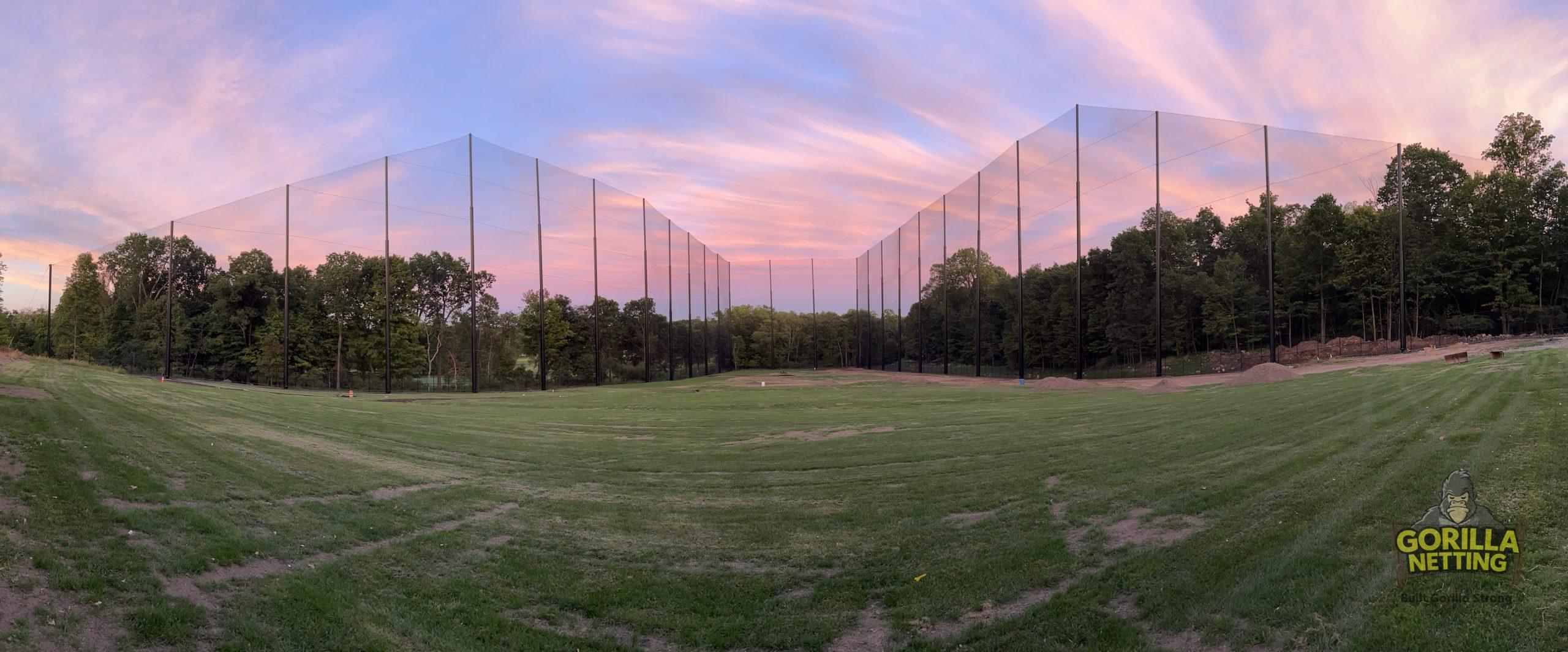
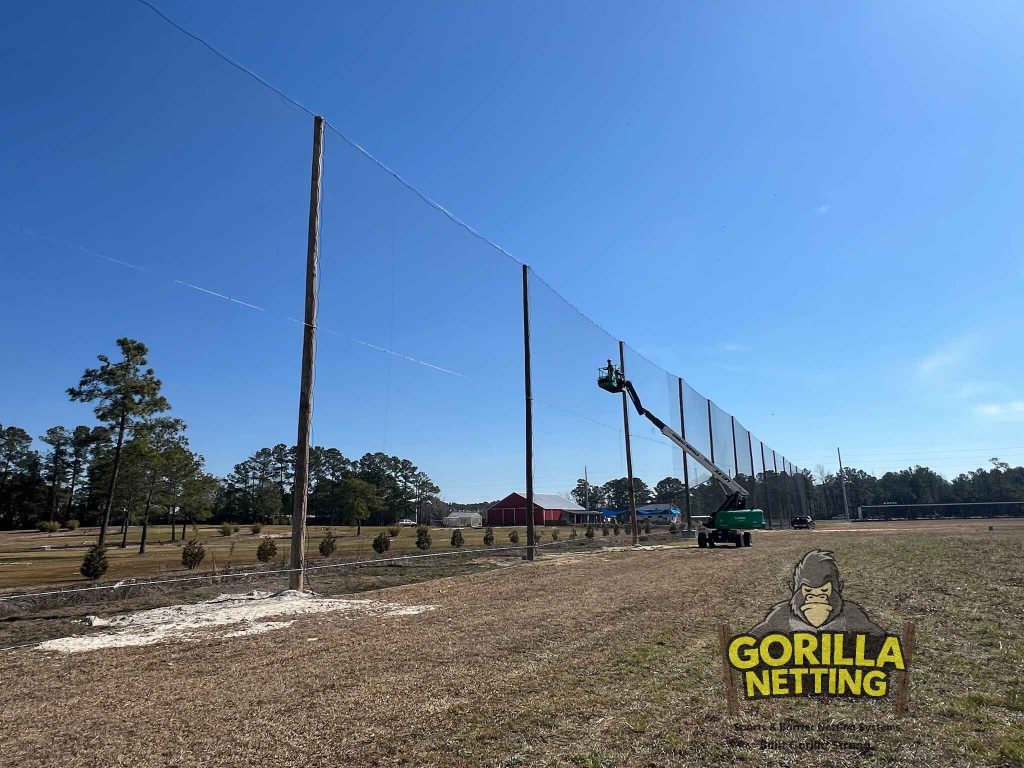
Golf netting installation at a driving range

What to Look For in a Golf Netting Installer

Not every vendor who sells netting installs it. Not every installer engineers it. There's a difference, and it matters when your barrier system has to stop a 160-mph ball flight.

  • Pole engineering experience. Golf netting poles — particularly on driving ranges — carry substantial lateral loads. A 100-foot steel pole in a 90 mph wind event is not a net-hanging problem. It's a structural engineering problem. Your installer needs to demonstrate they've engineered pole systems, not just mounted hardware to existing structures.
  • Ball-flight trajectory analysis. Generic height charts don't account for your range orientation, prevailing wind direction, or the specific shot distribution of your customer base. We analyze actual ball-flight trajectories for your site geometry before specifying barrier height or setback. Cookie-cutter specs create gaps.
  • Self-performed netting installation. When an outside installer handles your system, accountability gets split. If something fails, the vendor blames the installer and the installer blames the design. We use our own crews on every project. There's one phone number and one warranty.
  • Warranty that covers materials and labor. Material-only warranties are common and nearly worthless. If a cable fitting fails at 18 months, a material-only warranty covers the fitting — not the crew cost to go back out and fix it. Our 5-year warranty covers both.
  • References from completed golf projects. Ask for them. Golf netting has specific challenges — long panel spans, variable terrain, coordination with course operations — that a general netting contractor may not have encountered. We have completed projects at driving ranges, golf courses, and practice facilities across the US and abroad and will connect you with references on request.

Golf Course vs. Driving Range Netting — Installer Considerations

Golf course barrier netting and driving range netting look similar from a distance. The installation is completely different.

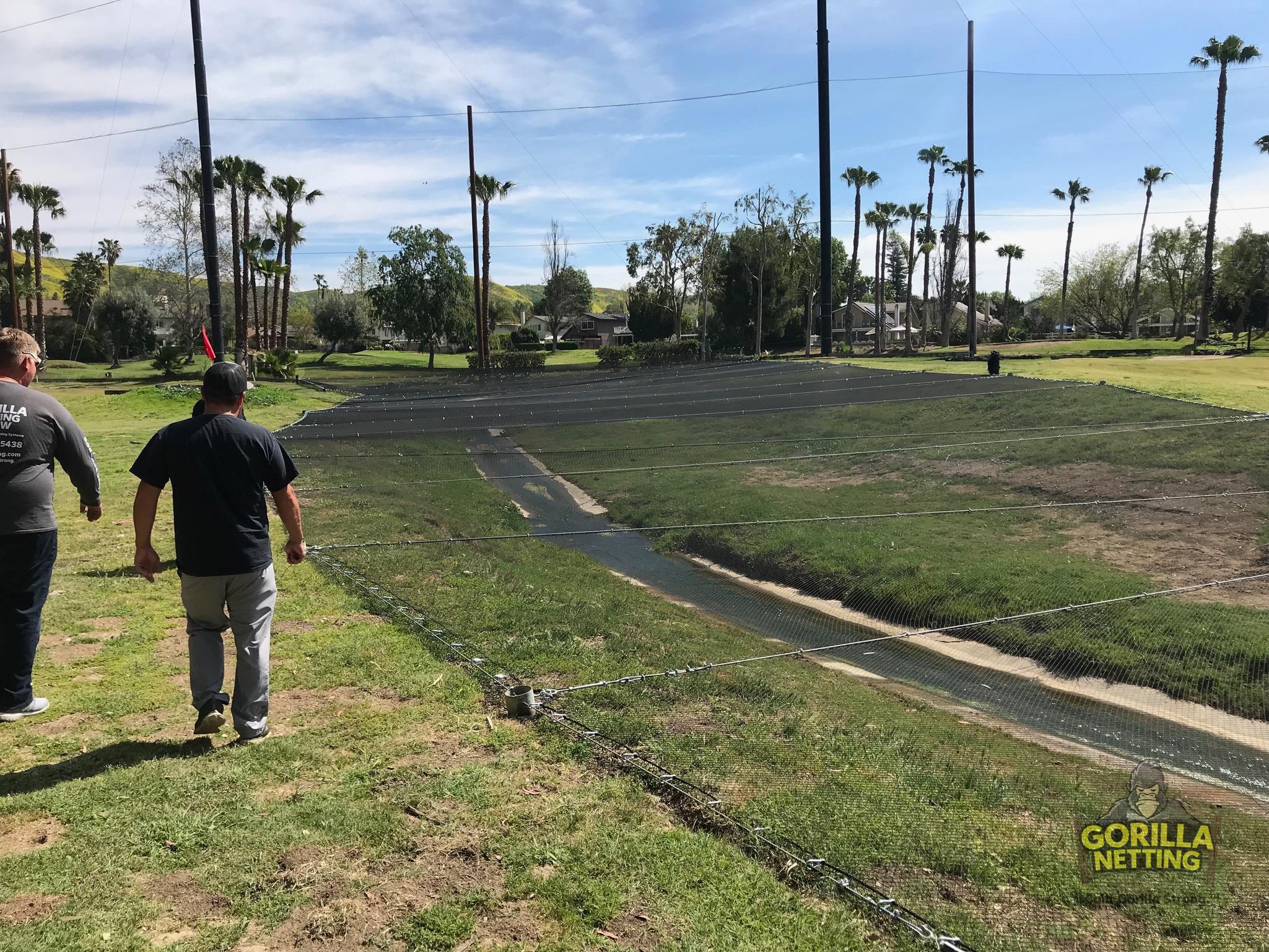
Golf course barriers typically run 15 to 30 feet in height. The goal is property protection — keeping errant shots off cart paths, adjacent roadways, and neighboring properties. Poles are shorter, pole spacing is wider, and installation equipment requirements are lighter. Most golf course barrier projects are completed in 3–7 days depending on linear footage.

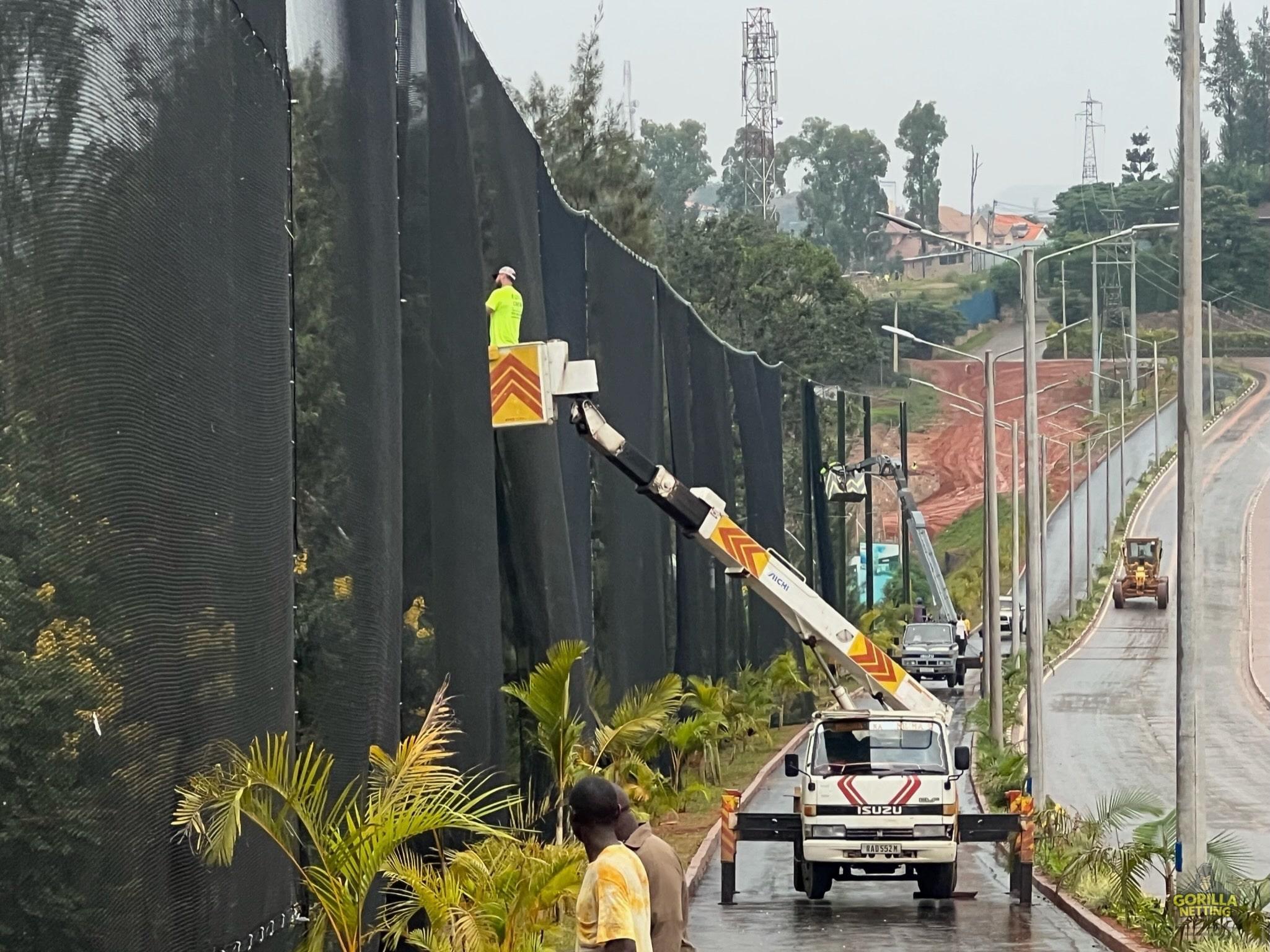
Driving range systems are a different discipline. Heights run 60 to 180 feet with staged steel poles set in engineered foundations. The loads are different. The equipment is different — we mobilize cranes and large-format aerial equipment for high-pole range builds. The engineering is different. And the installation timeline is different — 10 to 14 days minimum for a full-scale range build.

An installer experienced with one type isn't automatically qualified for the other. Confirm which type of project they've completed and how recently.

For a detailed breakdown of driving range-specific installation scope, see our Driving Range Netting Installation page.

Golf Netting Installation Timeline

Golf netting projects don't happen overnight, and any installer who promises a two-week turnaround from first call to installation complete is either not engineering the system or not pulling permits. Here's what a realistic schedule looks like.

Quote turnaround:We typically deliver a quote within 5 to 7 business days after receiving site information — dimensions, photos, site plan if available, and a description of the containment goal. Remote estimating from photos and plans is valid for most projects. A site visit isn't always required at the quote stage.

Engineering review: 1 to 2 weeks after scope confirmation. This is where pole design, cable sizing, foundation specs, and wind-load documentation are finalized. Facilities requiring stamped drawings for permitting receive those as part of this deliverable.

Material lead time: 2 to 4 weeks depending on netting specification and pole fabrication requirements. Standard knotless netting and galvanized cable are typically in the shorter range. Custom mesh specifications or specialty pole fabrication push toward the longer end.

Installation: Golf course barrier netting installs in 3 to 7 days depending on linear footage. Full driving range builds with tall steel poles run 10 to 14 days.

A note on permitting: the owner or general contractor submits the permit application. We provide stamped engineering drawings to support that application. We don't handle permitting on behalf of owners, but we give you everything you need to move it through.

Golf Netting Installation Scope

A complete golf netting installation from Gorilla Netting typically includes site survey and ball-flight analysis, structural engineering for wind loads, pole supply and setting (wood or steel), cable grid layout, UV-treated panel fabrication, professional hang, tensioning, and warranty sign-off. Optional breakaway integrations protect structural investments at high-wind sites.

We coordinate with course superintendents, general managers, and ownership groups to phase work around play schedules. Replacement projects start with inspection of existing poles, cables, and anchors before specifying new mesh—avoiding costly surprises during the hang.

Looking for a dedicated contractor overview? See our golf netting contractor page for turnkey scope and portfolio highlights.

Choosing the Right Golf Netting Partner

The right netting provider should deliver reliable engineering, honest scope, and proven installation quality. These fundamentals directly impact performance, safety, and lifecycle cost.

  • Choose a team with proven golf netting installation experience
  • Require clear design assumptions and documented load considerations
  • Confirm material quality and long-term maintenance expectations
  • Avoid quote structures with hidden scope costs

The Benefits of High-Quality Golf Netting

High-quality golf netting helps minimize hazards and create a safer, more controlled playing environment. It also supports better player experience by reducing distractions and protecting surrounding assets.

  • Custom engineering for each golf facility footprint
  • Protection for guests, neighboring properties, and adjacent traffic areas
  • Professional installation with consistent quality controls
  • Optional breakaway netting integration
  • Durable materials for long service life in outdoor conditions
  • 5-year full coverage warranty on completed installs

Contact Gorilla Netting for Golf Netting Solutions

Discuss your project with our team to get a custom recommendation and pricing plan tailored to your site.

Download: Netting Materials Guide

Compare nylon, polyester, and Dyneema (UHMWPE) with best-fit recommendations by application.

Golf Netting FAQ

What does golf netting installation include?

Golf netting projects include ball-flight analysis, barrier layout for ranges or course perimeters, pole or attachment design, UV-treated netting selection, installation by experienced golf netting crews, and warranty sign-off—whether for a practice tee line or full-course boundary.

What is the difference between golf course netting and driving range netting?

Driving range systems prioritize downrange containment with tall side and end panels. Golf course barrier netting follows fairway and property lines to protect adjacent homes, roads, or parking. Gorilla Netting engineers each layout for its impact pattern—see our golf vs. driving range guide in Resources.

Do you provide golf netting installation nationwide?

Yes. Gorilla Netting is a US-based specialty contractor headquartered in Florida with field operations in Kentucky. Our crews mobilize to turnkey install sites across the United States and internationally — location is not a barrier.

How can I get pricing for golf netting installers?

Send aerial or site photos, approximate lengths and heights needed, and whether you need new poles or can tie to existing structures. Request a project quote at gorillanetting.com/get-quote or call 1-800-274-1079. Pricing is scope-based after we review site layout, heights, materials, and access—not a flat per-foot rate.

Need project-specific details? Request a free quote or call 1-800-274-1079.